For Love of the World: Digital Revolt
-
za 21 mrt ’2615:00Theater de Veste
Ongeplaceerd Normaal € 24,50 Student € 7,50 CJP € 7,50
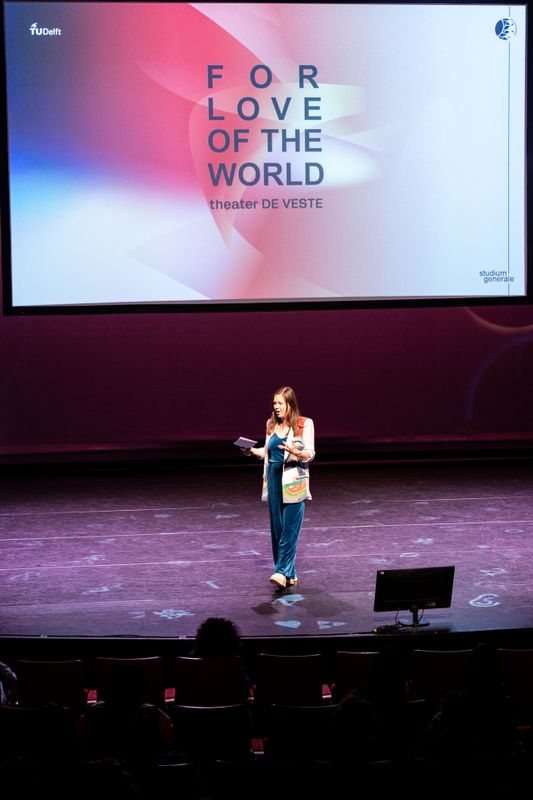
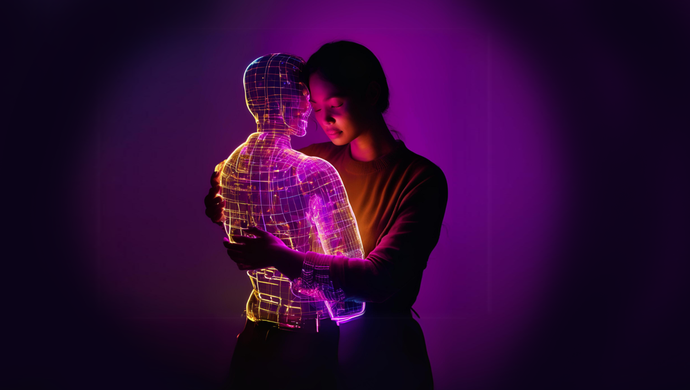
For Love of the World is part festival, part lab, part sanctuary. This year we invite you to dive deep into our digital world with a new perspective: as a space for connection, love, resistance, and hope.
This is where we are now, deep inside a hyper-normalised digital dystopia that harvests our data, hijacks our attention, feeds us fake truths and keeps us simmering in outrage. Some call it ‘normal’, others call it techno-feudalism, but whatever the name, the dividing line between our private selves and corporate power has liquefied. Our inner worlds and the digital machinery that surrounds us have merged into one.
The fight for our freedom and our ability to truly connect is on.
Which future will we accept? Will we all become obedient workers in a system built to keep us clicked and triggered, generating endless data for the new feudal technocrats?
Will we surrender to the lure of the algorithmic echo-chamber that feeds us reflections of ourselves, until we become so socially isolated and brittle that we shatter at the first pushback?
The choice is ours.
What if our digital existence didn’t have to be a system of control? What if it could be a place of boundless possibility: an invitation to rethink how we feel, act, love and live together. And how we revolt. How can we reclaim our future? And redefine our shared digital universe to transform it into an experience of love, connection, and creation, without our interconnectedness being used against us as a tool of power and surveillance?
KEYNOTES
James Bridle - Ways of being
James Bridle is a writer, artist, and technologist working at the intersection of art, technology, politics, and ecology. Their work—ranging from installations to essays and radio programs—has been presented worldwide by leading institutions such as the Victoria & Albert Museum, the Barbican, and Ars Electronica, and also reaches a wide audience online. Bridle is the author of influential books including New Dark Age (2018) and Ways of Being (2022), and presented the BBC Radio 4 series New Ways of Seeing on art and technology. Their essays have appeared in publications including The Guardian, Wired, The Atlantic, and the Financial Times. As the originator of New Aesthetic thinking and a much-in-demand speaker and educator (including NYU, the Dutch Art Institute, and TED), Bridle explores how digital systems, more-than-human intelligence, and power structures shape our perception and our world.
Payal Arora - From Moral Control to Digital Pleasure
Desire is often treated as something to be controlled or suppressed, especially in digital spaces shaped by surveillance and moral regulation. Yet across the Majority World, desire emerges as a vital force of resistance, care, and connection. From Iranian women claiming autonomy over self-expression, to queer communities in Uganda asserting the right to love, and people in Mexico reclaiming public spaces as sites of joy—digital desire challenges dominant regimes of control.
In this talk, Payal Arora argues for a reimagining of AI and digital platforms—one that takes pleasure, creativity, and care seriously. What would it mean to design technologies that honor desire as a source of dignity, freedom, and collective flourishing?
Payal Arora is Professor at Utrecht University and Founder of the Inclusive AI Lab. A leading digital anthropologist, she is the award-winning author of The Next Billion Users (Harvard University Press) and From Pessimism to Promise (MIT Press), and was named among the 100 Brilliant Women in AI Ethics. Her work has been featured in The Financial Times, Wired, and The Economist, and she advises organizations including UNHCR, Google, Spotify, and IDEO. Arora is a globally sought-after speaker and currently lives in Amsterdam.
George van Hal - The ‘Torment Nexus’ Effect
Silicon Valley visions of the future are increasingly shaped by dystopian imaginaries: space colonies, AI salvation, and survivalist bunkers for the happy few. Drawing on misunderstood science fiction, tech billionaires like Elon Musk often treat dystopia not as a warning, but as a roadmap — a phenomenon known as the ‘Torment Nexus’ effect.
In this talk, George van Hal examines how these narratives combine technological solutionism with anti-democratic ideology, and how they influence public debate, policy, and technological development. Importantly, he also explores how we can reclaim science fiction as a tool for critique rather than escape, and how alternative futures — grounded in democratic values, scientific realism, and collective responsibility — remain not only possible, but urgently necessary.
George van Hal is a science editor at the Dutch national newspaper de Volkskrant, where he writes on physics, space exploration, and science and technology policy. He co-authored a widely discussed series on the dystopian future visions of Silicon Valley billionaires and their disregard for democratic institutions. Van Hal is also the author of several non-fiction books, including two on the real science behind science fiction.
[The primary language of this event is English]